You think cockroaches are disgusting little pests hiding under your sink?
Think again.
Some cockroaches are longer than your palm, heavier than a small bird, and have been crawling this Earth for over 300 million years — long before dinosaurs even existed.
The largest cockroach in the world isn’t just big. It’s a biological marvel — armored, ancient, and almost alien in its design.
So what’s the scientific name of the largest cockroach? What species hold the record? And why should you — yes, you — care about a giant roach?
Let’s find out.
What Is the Scientific Name of the Largest Cockroach?
The title of world’s largest cockroach is shared by two extraordinary species:
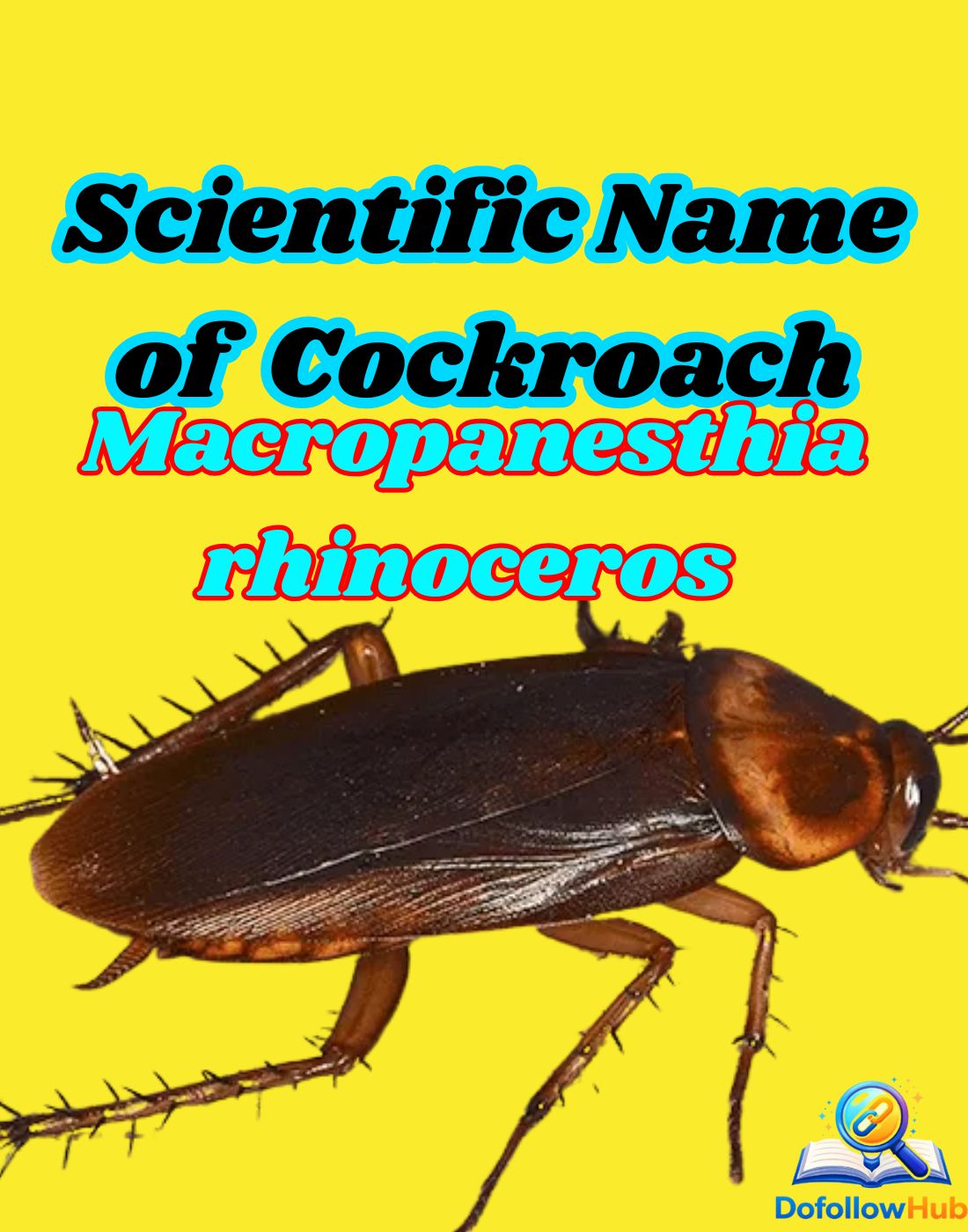
1. Macropanesthia rhinoceros — The Giant Burrowing Cockroach
Scientific Name: Macropanesthia rhinoceros Common Name: Giant Burrowing Cockroach / Rhinoceros Cockroach Family: Blaberidae
This is the heaviest cockroach on Earth, weighing up to 35 grams (heavier than some hummingbirds) and reaching lengths of 8 cm (3.1 inches).
Found exclusively in Queensland, Australia, this ground-dwelling giant doesn’t even have wings — it burrows. It’s the tank of the cockroach world.
Key Facts:
- Lives up to 10 years — extraordinary for an insect
- Plays a critical role in decomposing leaf litter and enriching soil
- Does NOT infest homes — it’s a forest species
- Actually kept as a pet in Australia (yes, legally)
2. Megaloblatta longipennis — The Longest Winged Cockroach
Scientific Name: Megaloblatta longipennis Common Name: Giant Winged Cockroach Family: Ectobiidae
This species holds the Guinness World Record for the longest cockroach, with a wingspan reaching up to 185 mm (7.3 inches) and a body length of 97 mm (3.8 inches).
Native to Peru, Ecuador, and Panama, this is a forest-canopy dweller — rarely seen, almost mythical in entomology circles.
Key Facts:
- Primarily nocturnal and arboreal (tree-dwelling)
- Rarely encountered in the wild due to its remote habitat
- Highly prized by insect collectors worldwide
- Its enormous wingspan makes it look more like a moth than a cockroach
A Quick Comparison: The Two Largest Cockroaches
| Feature | Macropanesthia rhinoceros | Megaloblatta longipennis |
| Record Type | Heaviest | Longest + Widest Wingspan |
| Weight | Up to 35g | Up to 10g |
| Body Length | Up to 8 cm | Up to 9.7 cm |
| Wingspan | None (wingless) | Up to 18.5 cm |
| Origin | Queensland, Australia | Central/South America |
| Lifespan | Up to 10 years | 2–4 years |
| Habitat | Underground burrows | Forest canopy |
Types of Largest Cockroaches Found Around the World
The insect world has more “giant” cockroach contenders than most people realize.
Blaberus giganteus — The Giant Cave Cockroach
Scientific Name: Blaberus giganteus
One of the largest cockroaches in the Americas, reaching up to 10 cm (4 inches) in length. Found in Central and South American caves, it feeds on bat droppings and decaying organic matter.
- Often called the “Death’s Head Cockroach” due to its distinctive skull-like marking
- Popular in the exotic pet trade
- A critical part of cave ecosystems
Gromphadorhina portentosa — The Madagascar Hissing Cockroach
Scientific Name: Gromphadorhina portentosa
Not quite the longest, but the most famous giant cockroach on the planet. Reaching 7.5 cm (3 inches) and notorious for its loud hissing sound, this species is endemic to Madagascar.
- Hisses by forcing air through modified spiracles (breathing holes)
- Males have prominent horns used for combat
- One of the most commonly kept exotic insect pets globally
- Frequently used in movies and TV shows
Periplaneta americana — The American Cockroach
Scientific Name: Periplaneta americana
The most widespread large cockroach in the world. Contrary to its name, it originated in Africa and was transported globally through trade ships.
- Reaches up to 5.3 cm (2.1 inches)
- Can fly short distances — one of the reasons people scream
- Found on every continent except Antarctica
- Capable of surviving without food for a month
Archimandrita tesselata — The Peppered Cockroach
Scientific Name: Archimandrita tesselata
A large, strikingly patterned cockroach from Central America, reaching up to 8 cm. Popular among hobbyists for its beautiful speckled appearance and docile temperament.
Jaw-Dropping Facts About the World’s Largest Cockroaches
They Survived the Asteroid That Killed the Dinosaurs
Cockroaches have existed for over 320 million years. They survived the Permian extinction (which wiped out 90% of species), the asteroid impact 66 million years ago, and multiple ice ages.
They are, by any scientific measure, one of the most successful animals in Earth’s history.
The Giant Burrowing Cockroach Is a Devoted Parent
Macropanesthia rhinoceros is one of the few insects that actively cares for its young. Females carry eggs in an internal brood sac and nurture nymphs in burrows for up to nine months — something virtually unheard of in the insect world.
Some Giant Cockroaches Are Completely Odorless and Harmless
Unlike their house-infesting cousins, species like Macropanesthia rhinoceros and Blaberus giganteus produce no odor, carry no common human pathogens, and do not infest homes. They are, scientifically speaking, some of the cleanest large insects on Earth.
They’re Ecosystem Engineers
The Giant Burrowing Cockroach processes enormous quantities of dead leaf litter, recycling nutrients back into the soil. Australian researchers estimate that one burrow can process 25 kg of leaf litter per year — making them crucial to forest health.
Cockroaches Can Regrow Lost Limbs
Juvenile cockroaches (nymphs) can regenerate lost legs during molting. While they can’t regrow limbs as adults, this regenerative ability during development is a remarkable biological feature.
Why This Matters — The Bigger Picture
1. Biodiversity Signals
The existence and health of giant cockroach populations is a direct indicator of ecosystem health. The decline of species like Macropanesthia rhinoceros signals deforestation and habitat loss in Australian rainforests.
2. Medical and Scientific Research
Cockroach biology — particularly their immune systems — is being actively studied for antibiotic-resistant properties. The brains of cockroaches contain molecules that have shown antimicrobial activity against MRSA and E. coli in early laboratory studies (University of Nottingham, 2010).
3. Sustainable Protein Source
In several Asian countries, cockroaches (farmed, not wild) are being researched as a low-cost, high-protein food source and animal feed alternative — part of a broader push toward sustainable nutrition.
4. Cultural Significance
In traditional Chinese medicine, Periplaneta americana extract (marketed as “Kang Fu Xin Ye”) has been used for decades to treat gastric ulcers — and there is emerging pharmaceutical interest in its active compounds.
Frequently Asked Questions (FAQs)
What is the scientific name of the largest cockroach in the world?
The heaviest cockroach is Macropanesthia rhinoceros (Giant Burrowing Cockroach). The longest with the widest wingspan is Megaloblatta longipennis.
How big can the largest cockroach get?
Megaloblatta longipennis can reach a body length of 9.7 cm and a wingspan of 18.5 cm. Macropanesthia rhinoceros can weigh up to 35 grams.
Where does the largest cockroach live?
The Giant Burrowing Cockroach lives in Queensland, Australia. Megaloblatta longipennis is found in Peru, Ecuador, and Panama.
Are giant cockroaches dangerous?
No. Species like Macropanesthia rhinoceros and Blaberus giganteus are not dangerous to humans, do not infest homes, and do not transmit disease in typical human contact.
Can you keep the world’s largest cockroach as a pet?
Yes. Macropanesthia rhinoceros, Gromphadorhina portentosa (Madagascar Hissing Cockroach), and Blaberus giganteus are all legally kept as exotic pets in many countries.
Conclusion: Rethink the Roach
The world’s largest cockroaches aren’t pests. They’re prehistoric survivors, ecosystem architects, and scientific goldmines that have outlasted nearly every other creature on Earth.
Macropanesthia rhinoceros burrows through Australian forests, nurturing its young with mammal-like devotion. Megaloblatta longipennis soars through Peruvian canopies with wings wider than your hand. Blaberus giganteus haunts Central American caves like a shadow from the Carboniferous period.
These creatures deserve not disgust — but deep respect.
Found this article fascinating? Share it with someone who still thinks all cockroaches are the same — they’re in for a surprise. 🪳
Drop a comment below: Which giant cockroach species shocked you the most?

Aqib is a passionate content writer and meaning explorer at DofollowHub, dedicated to helping readers understand words, phrases, and concepts in the simplest way possible. With a strong interest in language, SEO, and digital trends, she creates easy-to-read, informative content that adds real value to users.